

Even the Financial Times Agrees With Us: Christopher Nolan’s $250M The Odyssey Is an Absolute Disaster
From botched Trojan horses to Matt Damon’s middle-management grumpiness, Nolan’s joyless $250 million doomscroll manages to do the impossible: make Western literature’s greatest saga unwatchable

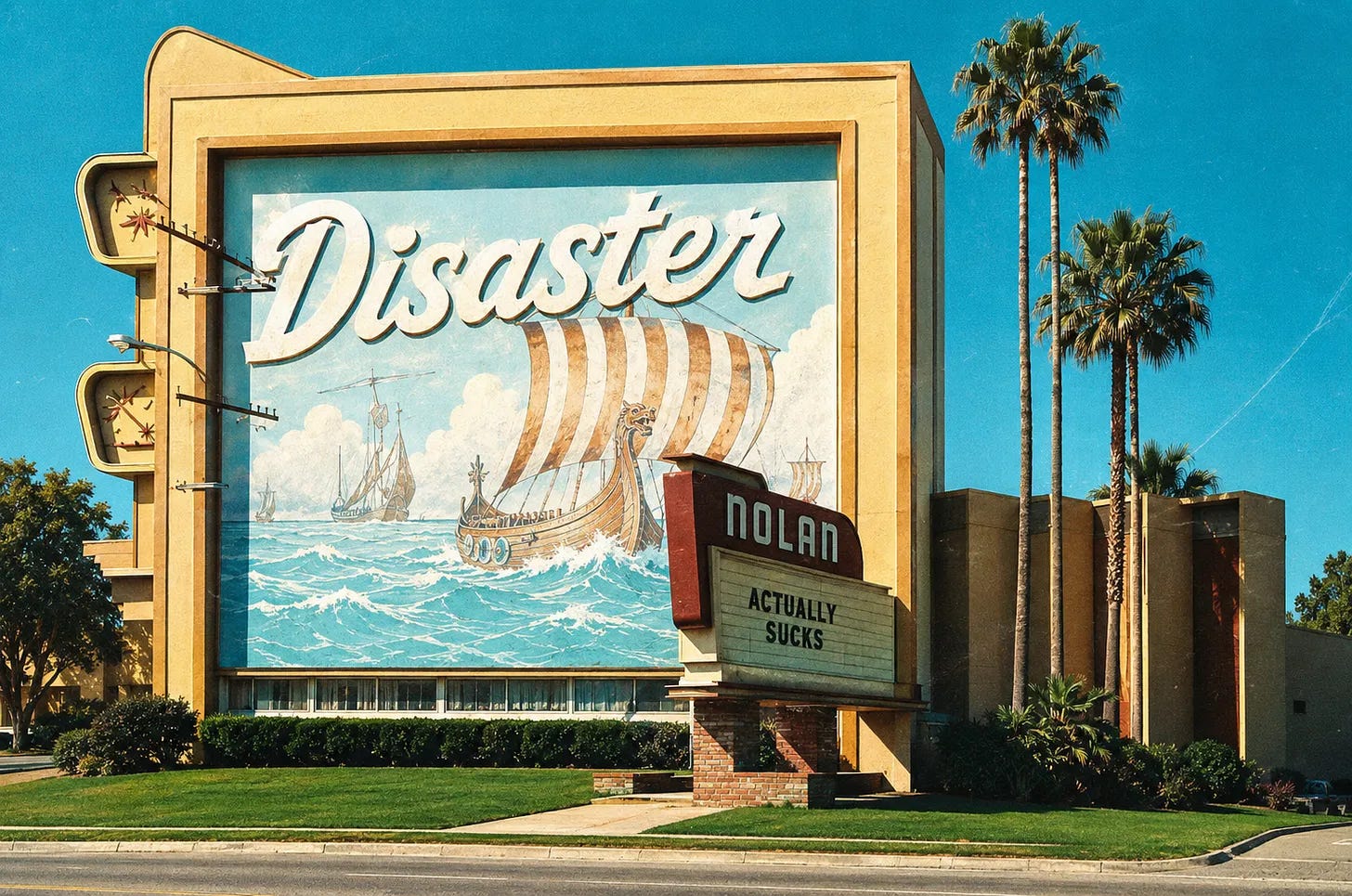
We were the first to call it because we saw how Christopher Nolan and his cast of mediocres rolled through Greece during the filming of The Odyssey: we knew this twisted to paean to ancient Greece was gonna be a turkey.
By the pace of his itinerary and by the choice of locations, I could tell he was rushing things. I do not think, by contrast, that Homer was rushing things.
The sober, no-fun Financial Times seems to agree with us: as one of its esteemed columnists writes today, “The exposition in the early scenes of Christopher Nolan’s The Odyssey is so inelegant that I still wonder — days later — if it is meant as a dry joke.” Ed. note: no, it’s actually incompetent filmmaking.
“The King of Sparta looks as though he mans the door at a South Beach nightclub.”
Glib? Good. There’s also:
“The moralizing at the end, when the film tries to deplore the violence that it has inadvertently glamorized for almost three hours, grates.”
There is a moment early in Christopher Nolan’s $250M sprawling nightmare, The Odyssey, when you realize the director hasn’t made an epic about human ingenuity or the longing for home. He has made an endless, grey, gazillion dollar doomscroll. Call it the Elonmuskification of the movies.
Sitting through this nearly three-hour slog feels less like witnessing one of Western literature’s foundational journeys and more like algorithmically refreshing a social media feed dedicated entirely to historical misery. It is an exhausting, joyless exercise in self-flagellation—a film that manages to turn the open, wine-dark sea into a claustrophobic, monochrome pit of modern existential dread.
Nolan’s fundamental error is a failure of spirit. Also, frankly, the screenplay stinks. Where Homer gave us metis—the cunning, cleverness, and boundless wit of a hero trying to outsmart monsters and gods—Nolan gives us yet another brooding, self-loathing protagonist in the mold of Oppenheimer. Matt Damon’s Odysseus doesn’t feel like a wily king or a legendary voyager; he acts like a middle manager collapsing under a mountain of corporate guilt.
The acting across the board feels curiously stilted, trapped inside a script that swaps mythic poetry for modern, hyper-analytical exposition. And repetition. Every line is delivered in a hushed, breathless mumble or barked over a wall of booming, brass-heavy score, making character interactions feel like a series of tense, dry depositions rather than a saga of mythic proportions. There’s some guy pounding on stick. Often. Loudly. Pointlessly.
Then comes Nolan’s baffling revisionism. The film’s depiction of classic events—from a bizarrely botched Trojan Horse sequence that looks like a tactical military blunder rather than an act of legendary cunning—is endlessly clunky. Worse is the film’s moral framework: Nolan seems obsessed with the cynical premise that everything the Greeks did under Odysseus’s leadership was an irredeemable moral crime.
Actually Chrissyboy, most of what the Greeks did was pretty great!
The assault on Troy isn’t framed with the tragic, solemn weight of ancient poetry; it is staged as an unmitigated moral failure, stripping the narrative of any nuance. In Nolan’s hands, the Greeks aren’t complex, flawed figures operating in a brutal, mythic world—they are simply bad men doing bad things, constantly pausing the narrative to pontificate on their own terrible choices and validate Nolan’s.
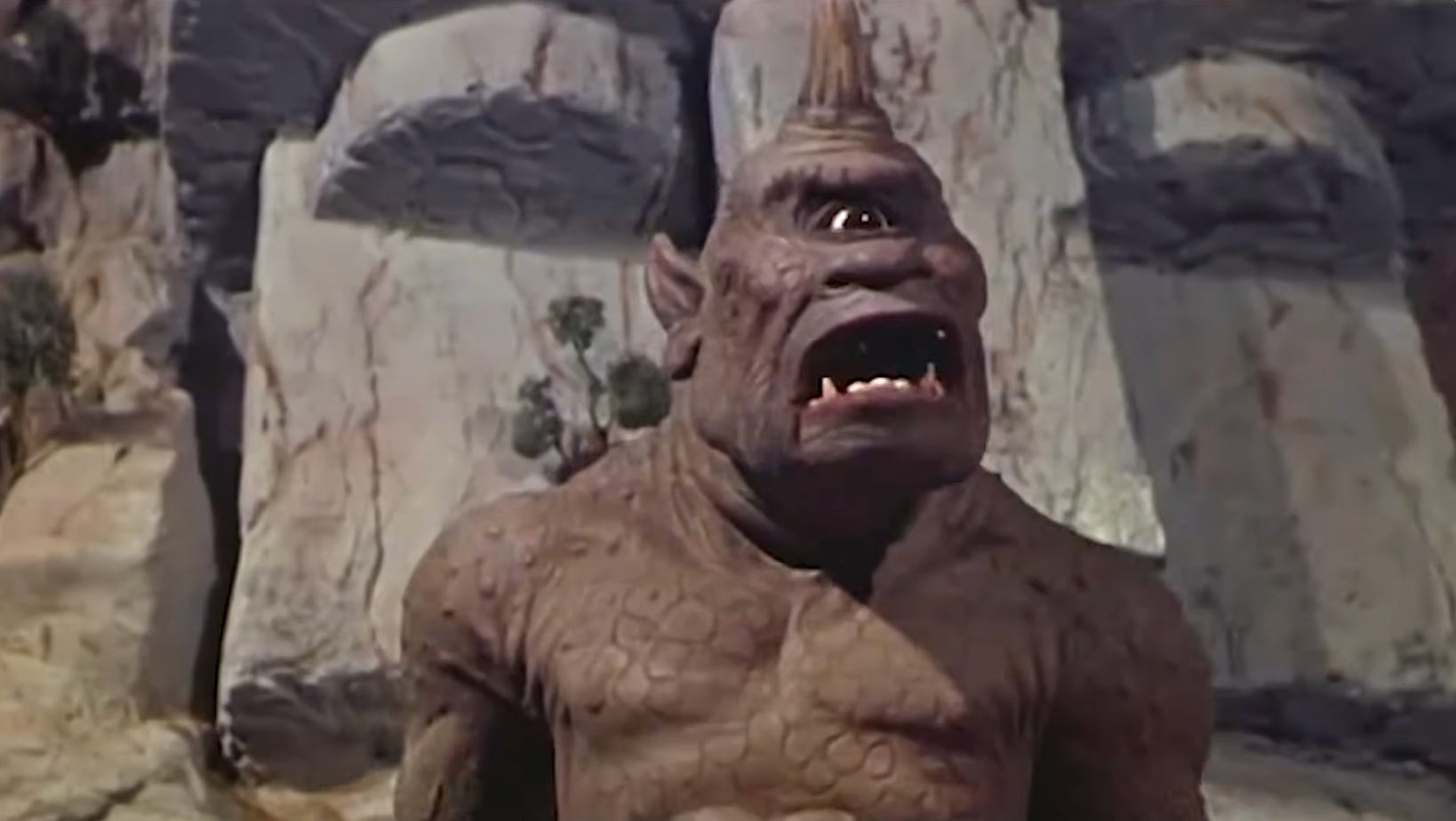
By forcing Homer’s epic through this hyper-cynical lens, Nolan utterly drains the narrative of its heart. Where is the unyielding spirit of adventure? Where is the sense of wonder, the terror and awe of the mythical, or the celebrated virtue of xenia (hospitality)? They are all systematically purged, replaced by a bleak, mechanistic march through set-pieces that feel designed to punish the viewer rather than transport them.
The grand scale of the world, the thrill of discovery, and the fierce, romantic impulse of travel—the very reasons this story survived three millennia—are just gone with the Aeolian wind.
What we are left with is a fundamentally hollow spectacle. Nolan has taken $250 million and the raw material of global mythology, only to flatten it into an oppressive, soul-crushing exercise in blockbuster doomism. It is a film that hates the very heroism it purports to depict, proving that while you can shoot on 70mm IMAX film, you cannot buy a soul with megabucks alone.
Or, for that matter, a very good movie.👎