Frenchman spends a weekend in "ruined" Santorini. Decides he loves it anyway.
After a forced "detox" from mass tourism, a paradoxically quiet Santorini offers empty streets, lower prices, and a sudden return to its old-world charm.

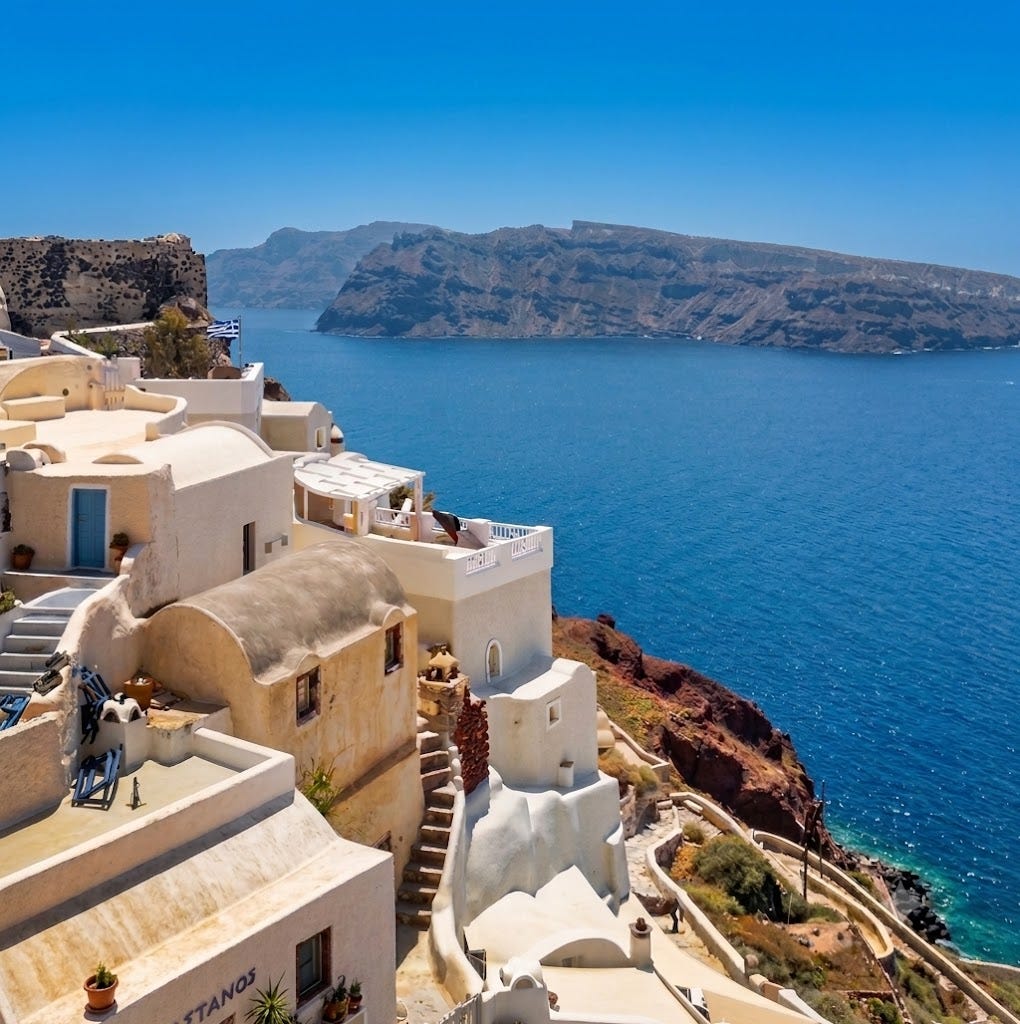
Santorini has been getting a bad rap lately over overtourism. But a French reporter for Le Figaro is officially over that. He writes:
Earthquakes in early 2025, cruise passenger caps, geopolitical tensions: the pearl of the Cyclades is undergoing a forced tourism detox. As a result, highly sought-after Oia is seeing breathable alleyways once more, tables with a caldera view can be booked the very same evening, and prices seem to be returning to a semblance of sanity. For how long?
He continues:
For a first-time visit to Santorini, the surprise is immense. In this late June of 2026, there is no need to elbow your way through the narrow streets of Oia, famous for its whitewashed houses perched on the steep cliffs of the caldera. Strolling peacefully, picking a restaurant at the last minute—even one with a plunging view of the sunset—wandering through Fira, the island’s capital, amid alleyways almost devoid of tourists...
Granted, a coach drivers’ strike might not be entirely unrelated to this sudden tranquility in the pearl of the Cyclades, which had become one of the poster children for overtourism. But the reasons may run deeper: a combination of factors might be making the volcanic island visitable for the general public once again.
A Tepid Recovery and Drastic Cuts
According to figures released by Fraport, the company operating fourteen airports in Greece including Santorini’s, traffic for May 2026 shows a slight 4.6% increase in arrivals on the island compared to May 2025—a month that hit a historic low due to the repeated seismic tremors that shook the island in January 2025.
Over the course of the past year, Santorini lost 16% of its airborne clientele. For this month of May 2026, the recovery remains timid: a +2.7% increase in passengers, while other destinations are doing much better, such as Mykonos with its +16%. On the French side, Transavia is maintaining its flights departing from Paris-Orly, Lyon, and Nantes. On the other hand, Volotea has scaled back over the last two years, cutting its routes from Bordeaux, Nantes, Lyon, and Toulouse. Only Marseille survived this downsizing plan, with two flights per week instead of three just two years ago.
Added to this is a government measure implemented last year, limiting the number of cruise passengers allowed to disembark each day to 8,000, compared to 17,000 as recently as 2024. Nine thousand fewer people per day on an island slightly smaller than the Île de Ré does not go unnoticed. Especially on the roads, where traffic jams have become far rarer.
“A return to the Santorini of the past”
“I’ve lived on the island for twelve years,” says Stefanos Zachariou, general manager of Nostos Apartments, located in Oia. “It feels like I’m finding the Santorini of the past again, and frankly, no one is going to complain about that.” This year, however, his establishment recorded numerous cancellations from Australian clients, who usually transit through the Middle East to reach Europe. “These travelers organize their vacations far in advance. We won’t be seeing them this summer,” he notes.
The crisis has also accelerated a shift in what’s on offer. Before Covid, Santorini was known for its trendy, excessively expensive restaurants with a decidedly international look. “An establishment like Fino, which used to focus on modern cuisine, chose to return to a more traditional, Greek-tavern-style cuisine at normal prices,” observes Stefanos Zachariou.
During our visit, many waitresses on the terraces overlooking the caldera were passing the time, waiting for a customer to need their service. The same observation held true in the fashion boutiques, where the sales assistants were far from overwhelmed.
Where have all the tourists gone?
Between Americans who have lost the desire to travel to Greece due to tensions in the Middle East, and Europeans who are thinking twice before opening their wallets, the lucky few who are there are fully enjoying the situation. And this is also being felt in terms of pricing. Between an initial search for accommodation on the famous blue-logoed platform and the price ultimately paid (in cash), a little negotiation can secure nearly a 25% discount.
In restaurants, many waiters admit that prices had reached heights that people are no longer willing to pay with their eyes closed. “Today’s clientele no longer wants to splurge like before,” concludes Stefanos. “They are looking for more authenticity and good value for money, and some professionals are beginning to understand that.”🍹
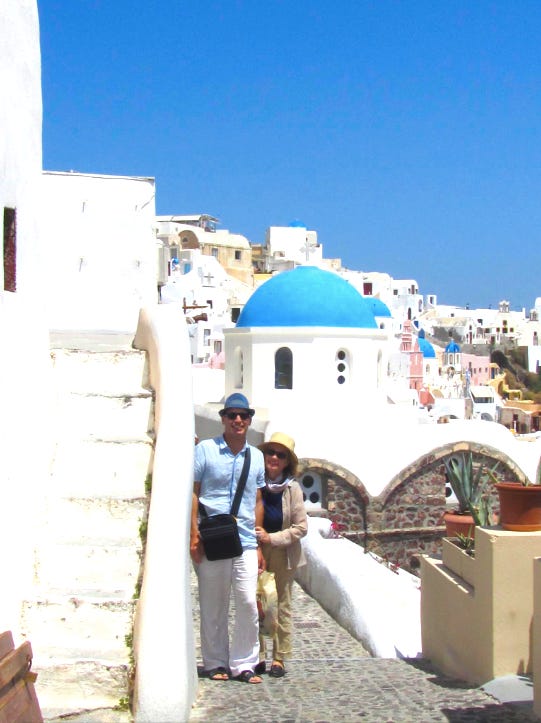
Translated from French. Merci to Le Figaro, Paris.