

From Bloodsports to Flat Whites: The Secret Greek Roots of Trump’s White House Cage Fight
Stripping away the tackiness of Washington's latest circus reveals the history of pankration—and the charming, hipster-heavy district it left behind.

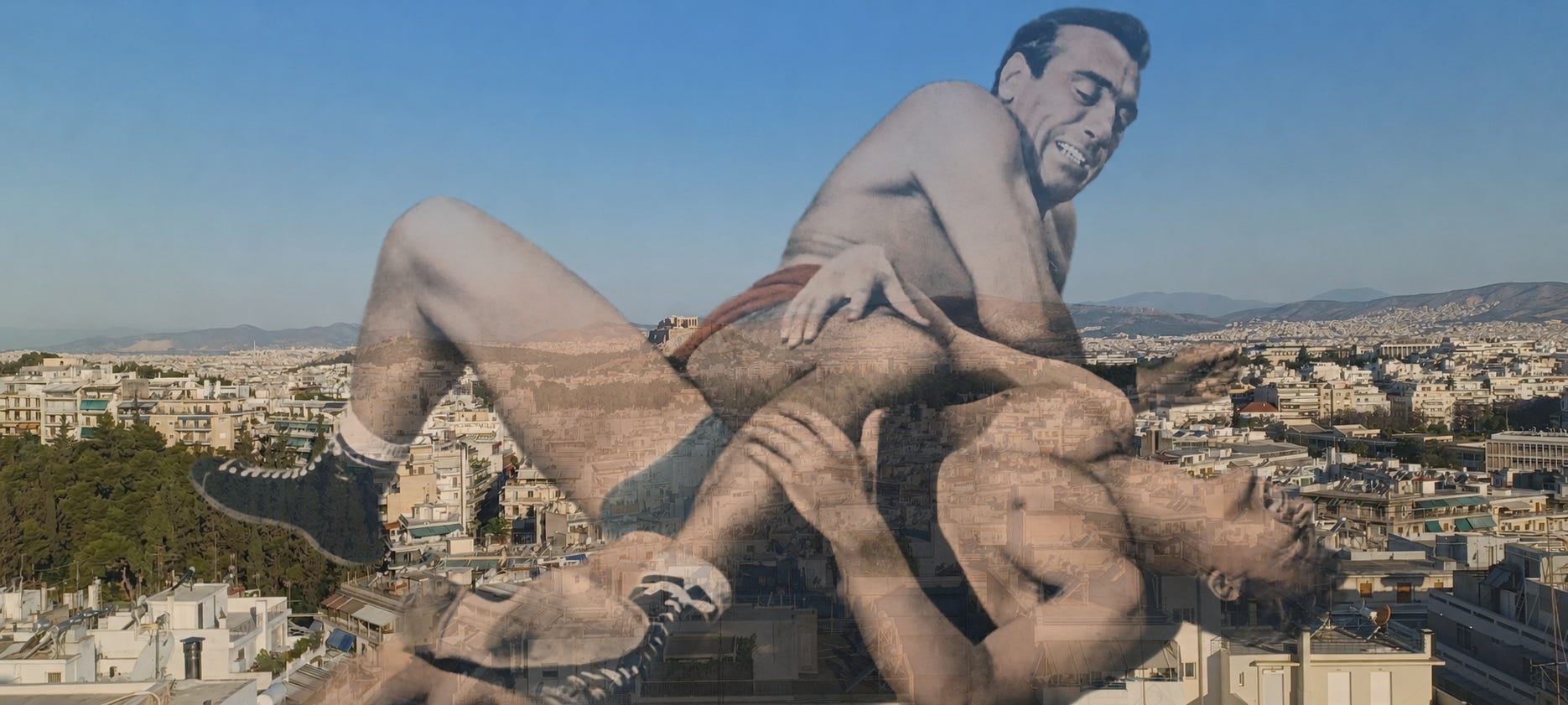
You might have heard about Old Man Trump’s latest venture into dignified statesmanship: a UFC cage match slated to go down on what used to be the White House lawn. Plenty has already been said about the vulgarity, the patent inappropriateness, and the questionable legality of the event—though, let’s be honest, bad taste in America is an inexhaustible natural resource.
But if you peel away the lawyers, the corruption, and the layers of spray-tan tackiness, you find an event with roots buried deep in ancient Greece. Specifically, we’re talking about the pankration.
Once upon a time, the ancient Greeks decided the Olympics needed a narrative arc with a bit more teeth. Enter wrestling, the second-ever sport added to the Games, in 648 B.C. Apparently, standard grappling wasn’t spicy enough for the ancients, because they unleashed the pankration—essentially the UFC of antiquity, but with a terrifying “almost anything goes” policy.
Similar to the “mixed martial arts” of your typical UFC smackdown.
The rulebook was remarkably brief. You could do pretty much whatever you wanted to your opponent, provided you respected the only three golden rules of ancient fight club:
No gouging out eyes.
No biting.
No kicks to the groin.
Everything else? Fair game. And where did this remarkably “elegant” display of raw aggression get its start? A lovely, surprisingly peaceful Athenian neighborhood that would eventually be called Pagrati.
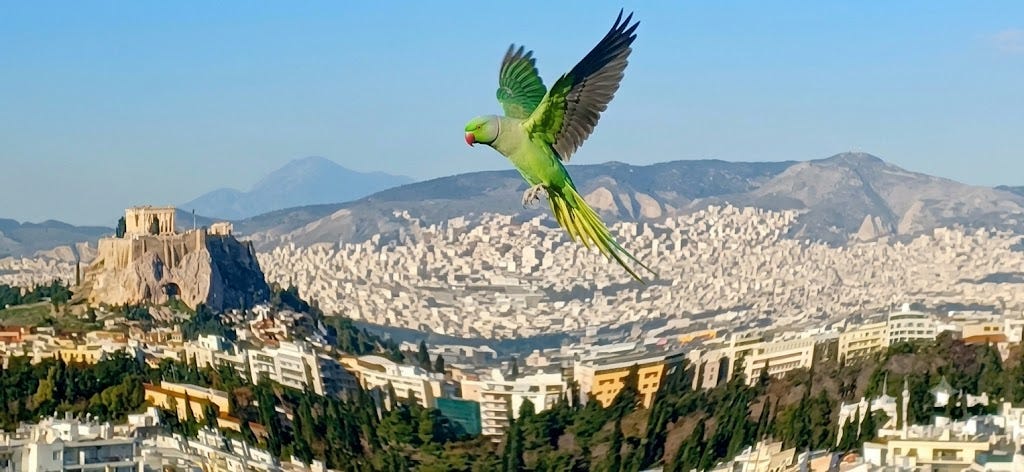
Backstage at the Kallimarmaro
Pangrati (or Pagrati, as the locals call it) may also have derived its name from ancient descriptions found in the area that read ΗΡΑΚΛΕΙ ΠΑΓΚΡΑΤΕΙ (“To Hercules the All-Powerful.”) Anyway, the large neighborhood sits just a 15-minute walk from Syntagma Square. Yet, the vast majority of foreign visitors never venture past its star attraction: the Panathenaic Stadium. This horseshoe-shaped, all-marble masterpiece—popularly known as the Kallimarmaro—marks the edge of the historic center, its gleaming white mouth opening out toward the city.
Focused entirely on the stadium, few tourists ever wonder what lies in the opposite direction. But the hills flanking the Kallimarmaro adjoin one of the most charming, authentic neighborhoods in Athens. Once you step inside, Pagrati feels like you’ve wandered backstage at a theater—into a hidden, homely world known only to the locals who run the show out front. It is a place where real Athenians actually live, work, eat, and play.
One of the most rewarding ways to enter the neighborhood is via the forested hills that float above the stadium. Walking along Agras, then Archimidous, a winding path leads you through pine and cypress trees to the summit of Ardittou Hill, where a council of ancient Athenian judges once held court. Today, you’ll find the fragmented ruins of a shrine to Tyche, the goddess of fortune, alongside a ravishing view that stretches across the Acropolis, the modern sprawl, and all the way out to the Aegean Sea.
From Vintage Neons to Parisian Squares
Pagrati doesn’t do uniform style. It lacks the picture-postcard neoclassical neatness of Plaka, opting instead for a diverse architectural mixtape: princely old villas crumble comfortably next to mid-century apartment blocks and cutting-edge modern additions. Look closely and you’ll spot the BlueBuilding on Effranoros Street, a boutique complex featuring whimsical design elements by the late Greek artist Alekos Fassianos. Nearby, the retro neon glamour of Cinema Palas, which opened in 1925, hints at the neighborhood’s high-culture heritage (this small area once boasted 23 cinemas), a spirit that lives on today at the idiosyncratic Life Sport Gallery.
Inquisitive wanderers are well-rewarded here. Peer through an illuminated window as you navigate the shadowy streets at dusk—perhaps on the trail of a hipster café you’ve been tipped off about—and you’ll notice the residential decor in these parts is fiercely, unironically vintage.
Then there are the squares. Proskopon Square feels decidedly more Paris than Athens, channeling a Continental vibe with its tall trees, looming apartment buildings, and sidewalk cafés packed with people-watchers.
On the opposite side of the neighborhood sits Varnava Square, a bohemian smorgasbord of local life. In the streets that fan out like sunrays from its oval center, the architecture softens. Large, hulking apartment blocks give way to smaller, elegant buildings dressed in pastel shades, accompanied by a constantly multiplying selection of places to sip and nibble.
More
For a change of pace, leave the buzz of Varnava behind and head west toward Markou Mousourou and the western edge of Ardittou Hill. Here, you’ll feel as though you’ve stepped into the Athens of a century ago. Freestanding, eclectically styled villas define this quiet mini-neighborhood.
Keep heading west and you’ll eventually hit the First Cemetery of Athens. Technically sits in the adjacent neighborhood of Mets. With its ornate mausoleums and grand, tree-lined thoroughfares, this is Athens’ answer to Paris’ Père Lachaise. Though far less visited than its French cousin, it shares that same profound sense of peace, insulated from the roar of city traffic by a thick buffer of pines.
Outside the somber walls of the cemetery, however, Pagrati is a young, lively neighborhood that rarely sleeps. Its cafés and bars stay packed from morning coffee well into the night. It may no longer host the brutal, blood-soaked spectacles that gave it its name, but as a place to escape the tourist traps and catch the real rhythm of Athens? It’s a knockout.
In Athens now? Ask about our Pagrati Blackbook of the best local addresses.