
It happens every summer: foolhardy tourists going on hikes in rugged terrain that locals wouldn’t dream of going near, because yes, locals are always right.
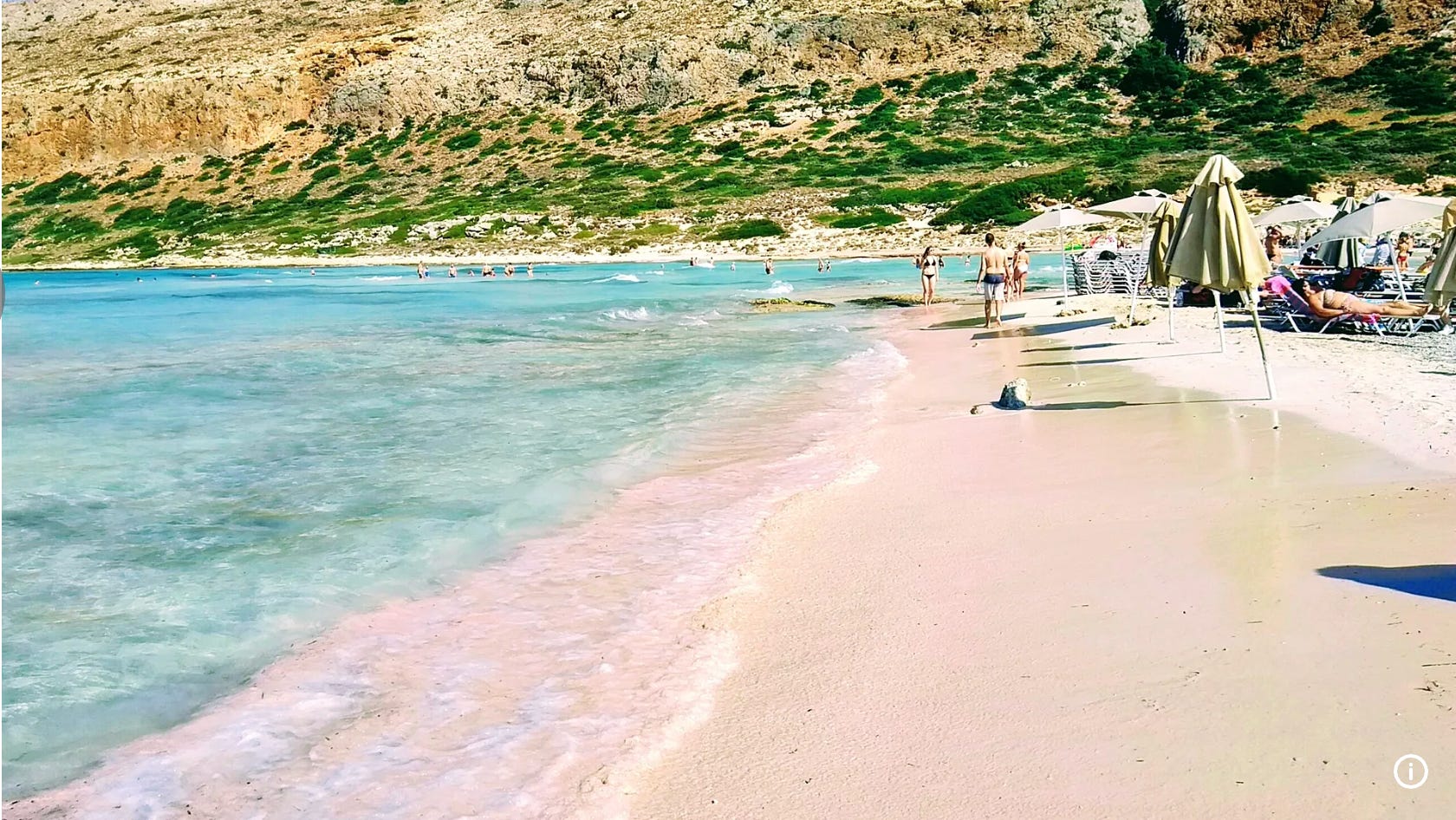
On Sunday, the predictable happened again—a 41-year-old French tourist died in Crete after collapsing on an off-limits hiking trail near the heavily Instagrammed beach of Balos, in the western edge of the Greek island. While a forensic examination has yet to determine the official cause of death, initial indications point to dehydration and severe heatstroke.
A local press report included a photo of rescue workers carrying what appears to be a sort of portable body bag along rugged terrain.
Greece is currently experiencing a late summer heatwave. Despite this, Greek media reported that emergency responders conducted three separate rescue operations in Crete on Sunday—including the rescues of a 54-year-old hiker in the Imbros Gorge and a 73-year-old near the Agia Fotini cave.
In the case of the French tourist, the woman and her partner had reportedly parked their car at Falasarna (another popular beach area) and then set off on a hiking trail to Balos ignoring warnings that the trail marked as E4 is officially closed. According to one press report they were tagging along with a group of Finnish hikers. On the return hike to the car, less than a mile away, she collapsed. That’s when someone is said to have called emergency services.
Temperatures in much of Crete were in the high 90s over much of the weekend. The sun is intense there, and cloud cover tends to be intermittent at best. Such conditions make hiking hazardous, particularly in rugged terrain.
We can confirm that the terrain between Falasarna and Balos is very rough. That’s why many people who choose to visit Balos and its wide lagoon do so by boat excursion from Kissamos. Better to get seasick than dehydrated.
This is part of the problem with remote spots like Balos that become famous or “iconic” mainly because of Instagram and TikTok: these images are essentially false advertising. Beautiful spots for sure, but quick shots by amateurs totally divorced from the harsh reality of the actual geography.
It was not immediately clear if the Frenchwoman on the death trail to Balos had been inspired by Instagram to set out under the adverse weather conditions. But again, it is social media that put these places on the map.
No local in their right mind would hike to a beach like Balos in the middle of summer. Even the normally busy, noisy streets of Athens are deader than a doornail for much of the afternoons in the present heat. The Athenians who are not still on holiday play it smart, doing their shopping in the cooler morning hours and then venturing out again after sunset. Because they know.
Earlier this year, Greek media reported on how hapless tourists risk their lives for a selfie with a scenic background, such as a above famous beach in Zakynthos. Ignoring signage.
These tragedies can for the most part be averted. Are social media companies like Meta complicit? Many seem to think so.
It’s not only Facebook and Instagram, though. Sometimes people just take on too much, generally not understanding how quickly heatstroke can happen. Two years ago a BBC presenter, Dr. Michael Mosley, was found dead on the island of Symi after an intense rescue effort. He was found only a matter of several yards from the beach he had been trying to reach—by foot.
In the summer Symi heat, again, the best and sometimes only way to reach certain beaches is by boat. These boat rides mean a little less independence, but they are generally cheap and convenient when summer’s at full tilt.
A couple summers ago, we took one such boat from the town of Sfakia down in south Crete to Loutro, a hamlet that is only accessible by boat or by a long walk. On board the boat we met a Swiss couple who said that their hotel receptionist told them they could walk to Loutro—but they gave up when they realized how difficult and hot it was, even with enough water. Without enough water, such a foray can prove not just futile but fatal. Was that hotel remiss in advising them to take that hike?
Let’s not forget American hiker Albert Calibet, who in June 2024 went missing while hiking, alone, on the island of Amorgos during an extreme heat event. He was never found. In that case, the U.S. Department of State was—surprise, surprise—not particularly helpful.
Which brings us to our headline. Go to the State Dept’s website for Greece and you’ll see, in addition to a photo of Kimberly Guilfoyle wearing a wool jacket that looks like it fell off a delivery truck at the Boot Barn, this warning: “Worldwide Caution: The Department of State advises Americans worldwide to exercise increased caution.”
Wow—don’t you feel like your tax dollars are being well-spent? If you’re traveling abroad boys and girls, well, gosh darn it, be careful!
That’s not exactly wrong advice, but neither is it alright. Our diplomats may not be on their toes, but you better be. To wit:
Recall that Greek summers can be steamy. If a trail is closed, don’t go rogue. Stay off it. And stay hydrated. When you are walking around Athens, staying hydrated means carrying bottle of water and wearing a broad-brimmed hat. When you are walking from your hotel or parking lot to a remote beach without facilities, staying hydrated means having way more water than you think you’ll need, never going alone, avoiding peak sunshine during a heatwave (especially from 2:00 PM to 5:00 PM) and having a fully charged cellphone with you at all times so you can call the emergency number 112 if you have to. And do not, repeat, do not, be fooled by Instagram. Social media is not your personal concierge, and Instagram is not going to save you. Word.