Greek Island Secrets Revealed: Culture, Coves and Out-of-This-World Pizza in Ios
Your little black book for what is possibly Greece's most misunderstood island.

Not to sound too Zen about it, but there comes a moment on Ios when you realize the intensity of the island may come from all the things that it does not have. No airport, no mammoth cruise ships in the port or chain hotels blocking the beaches — which is not to say that it feels entirely isolated. Santorini, after all, is just one more ferry stop away.
But it’s also a world away from Santorini’s Instagram-famous (and lately rather overcrowded) sunset perches. Despite its reputation as a summer party island, perennially popular with Europe’s hormonally charged youths, Ios is also endowed with an array of graceful little white churches, heavenly beaches and an insouciant energy that all add up to something quite different.
Ios retains that unhurried Greek island feeling that other islands in the Cyclades like Mykonos and Paros had years ago. Mass tourism takes its toll, though, and while Ios certainly has its own issues with overdevelopment, these are not nearly on the scale of what some of the better-known islands in the Aegean are currently facing. Not for the moment, at least.
It is not necessarily the kind of place where you simply drop your towel on the beach and let the suntan marathon begin. You could do that of course but the first hint that there’s more here than natural beauty is right in the charming little port: a bronze bust of Homer. According to myth and most accounts, the great poet’s burial place is on the rugged northern coast of Ios — though not proven, it would be unromantic to doubt this.
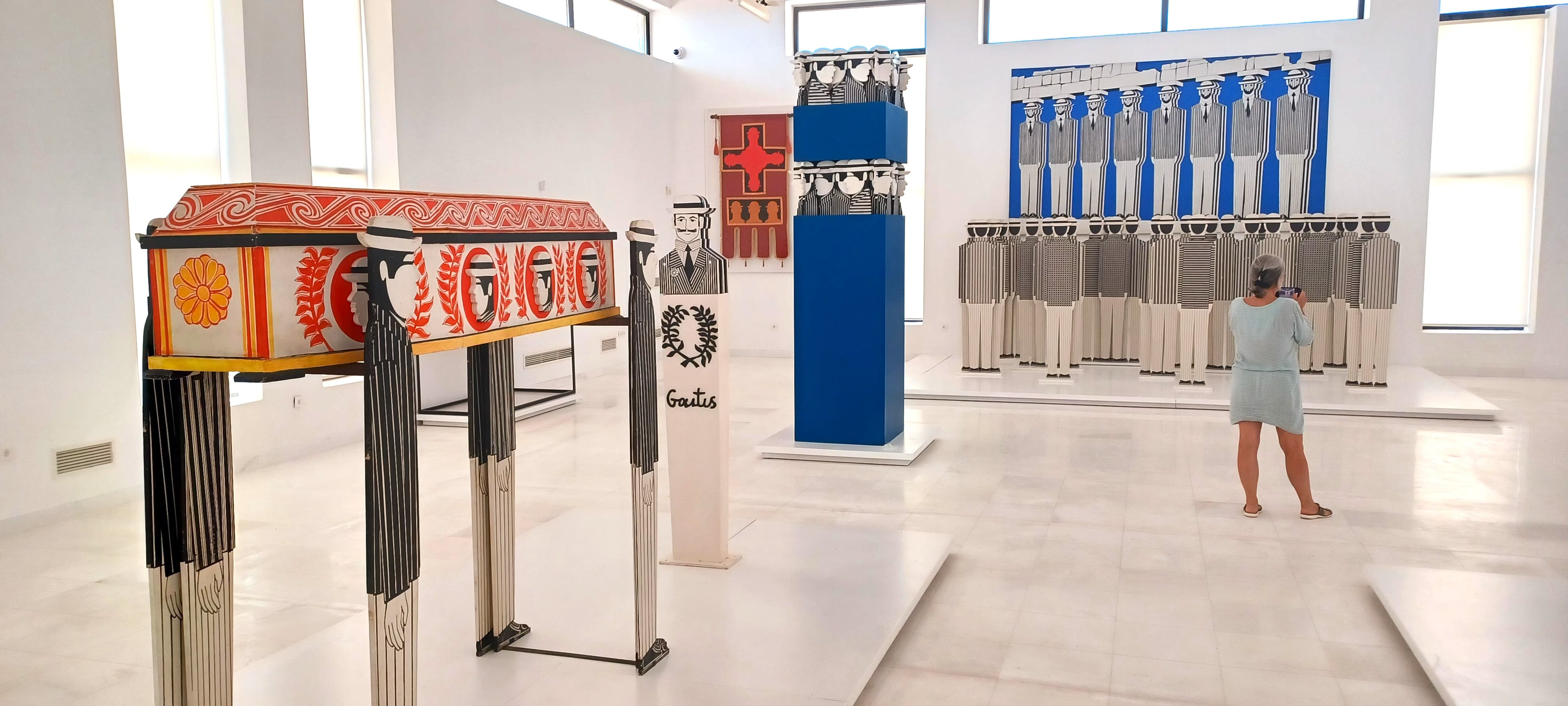
If the most visible forms of wildlife on Ios are the lithe Aussie party animals who helped put Mylopotas Beach on the map, artists have also been drawn to the island over the years. One of those was the late Yiannis Gaitis, renowned in contemporary art circles for his numerous paintings and other works featuring his defiant anthropakia or “little men.” His wife, Gabriella Simossi, was a noted sculptor and together they lived in a stone house in Ios, facing the sea.
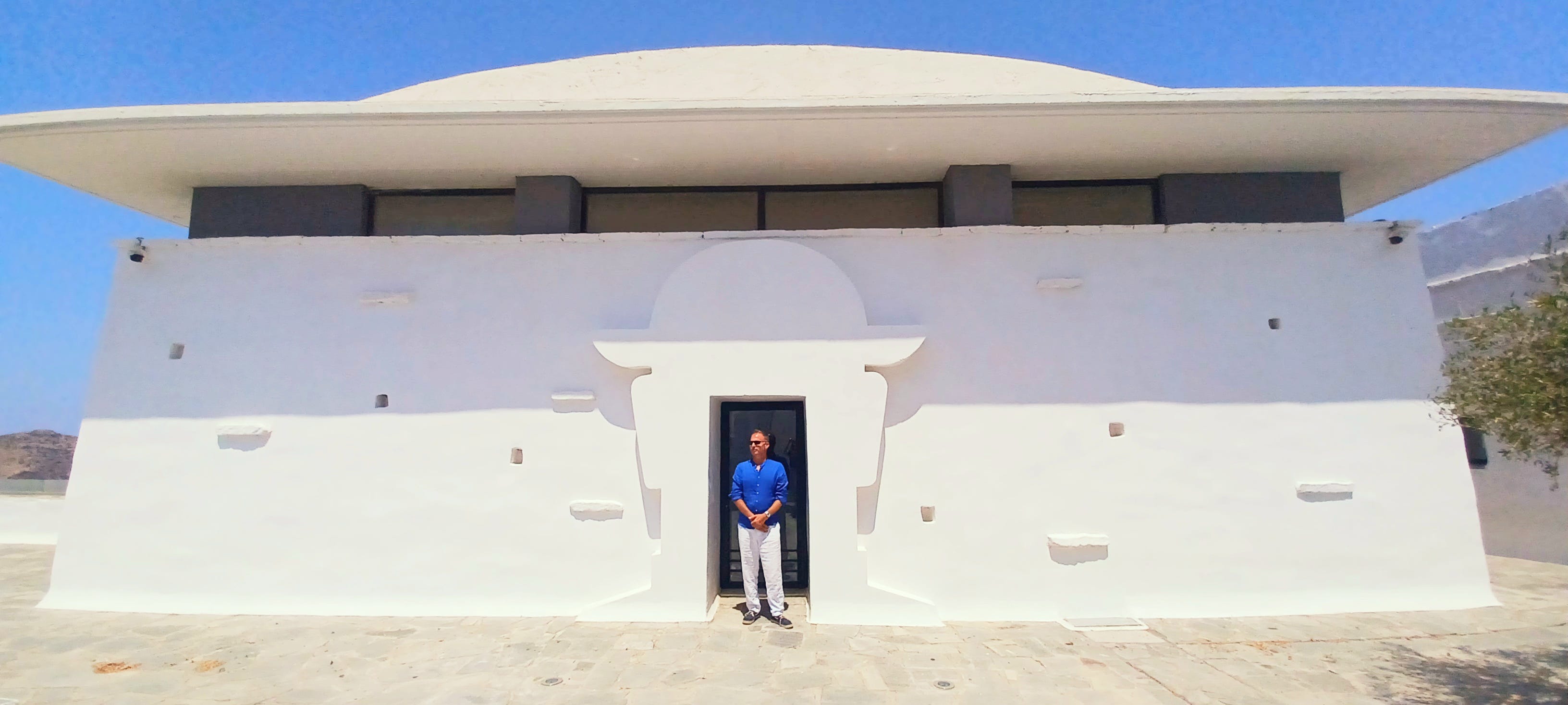
In 2024 the island welcomed the long-awaited Gaïtis Simossi Museum. At the opening, Greek Minister of Culture Lina Mendoni noted that the museum “fits harmoniously into the natural landscape of Ios” and “integrates elements of the work of Gaitis and Simosi.” Indeed: the back entrance to the main building is crowned by a giant, sculptural fedora—the very hat worn by the faceless anthropakia in Gaïtis’s paintings—rendered here as a sweeping piece of Cycladic white architecture.
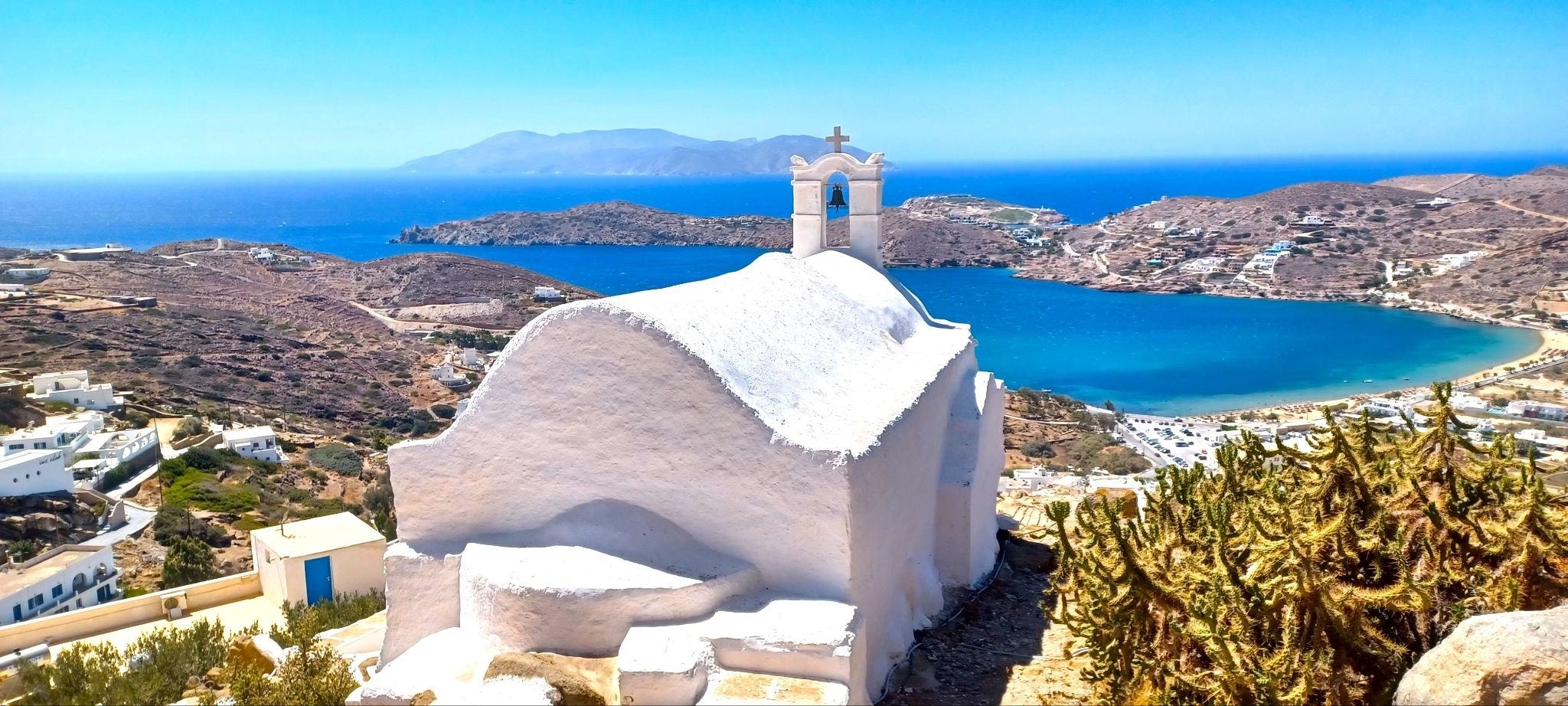
The sweeping vistas from here include both the Chora, itself a labyrinth of whitewashed lanes reaching up a steep hill, the harbor and the island of Sikinos beyond it.
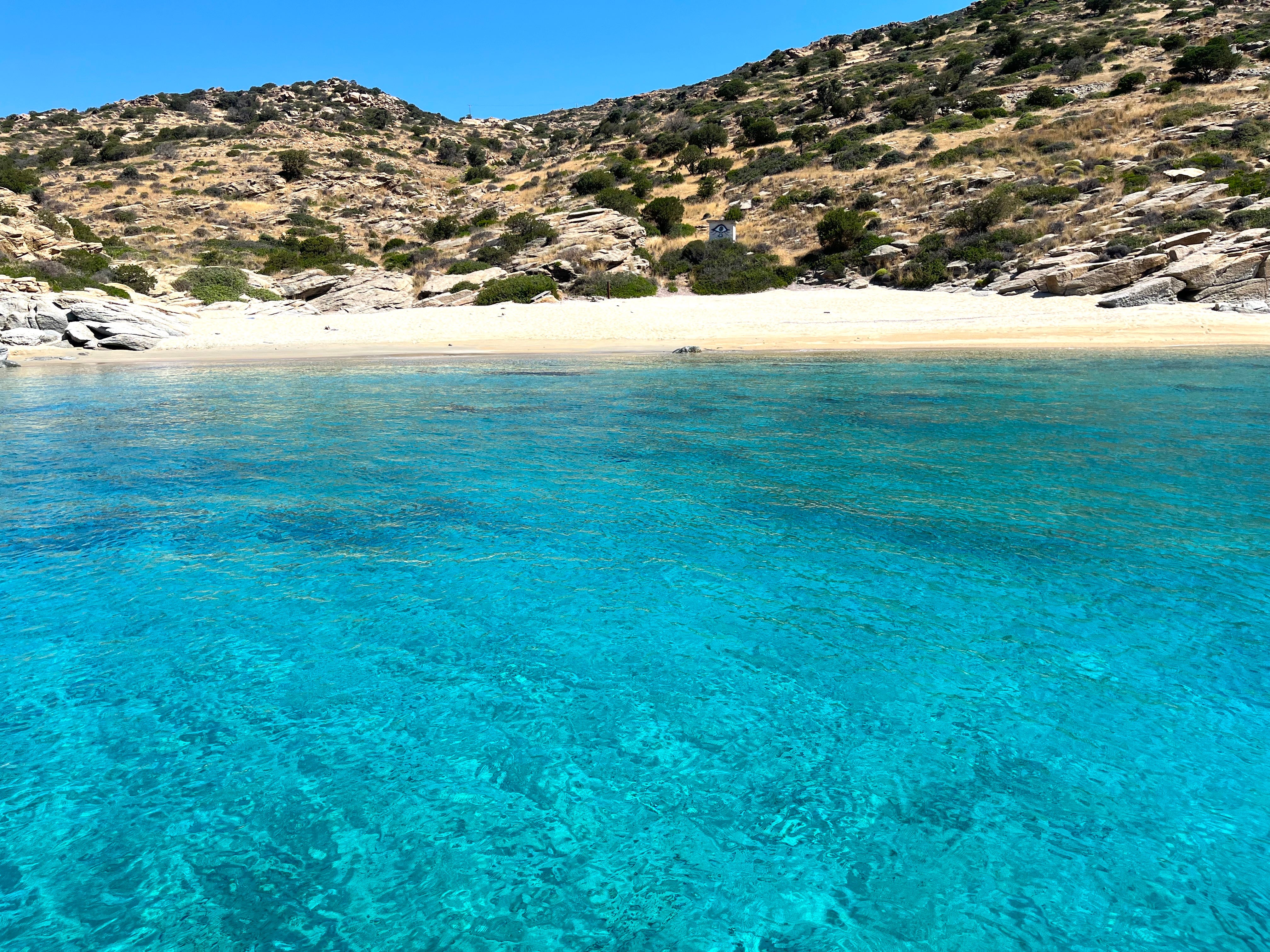
To find one of the best beaches in Ios, though, you need to venture south to Manganari. A new road from Mylopotas leads to this ravishing spot where some scenes from the movie The Big Blue were filmed (if you’re feeling peckish, make a detour to the excellent Diaseli traditional cheesery along the way). It’s a dazzling ribbon of five interconnected beaches, all with sparkling aquamarine water that suggests a Caribbean paradise. Once you’ve parked, access to the sand is surprisingly easy; by contrast getting to the secluded Kolitsani cove beneath Chora requires a bit of a hike that can be strenuous for some.
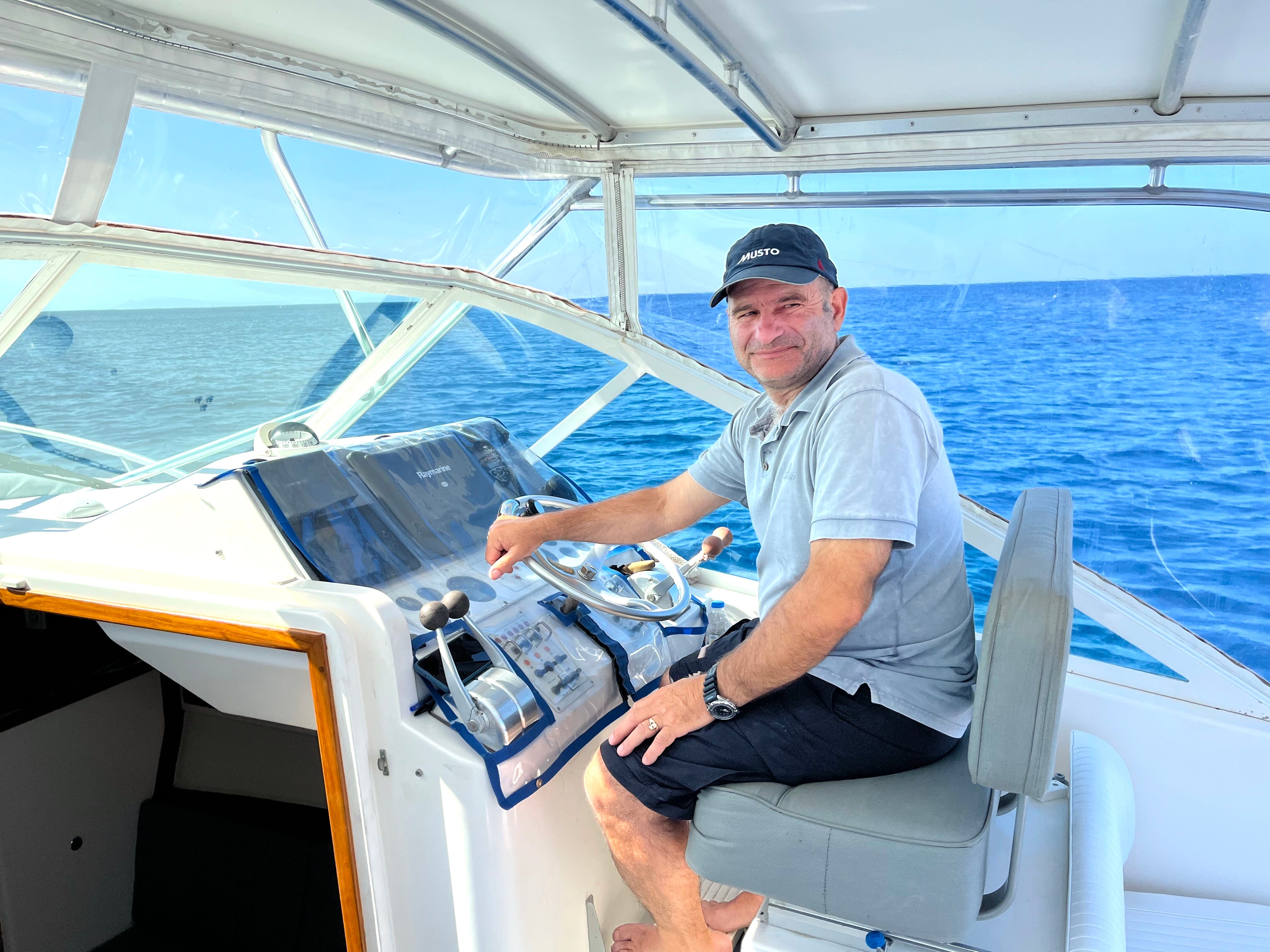
Beyond Manganari’s quiet beachfront tavernas lies Kalamos, a broad and even more secluded stretch of sand positioned just past a local monastery (driving is essential). Pristine as they are, the island’s most spectacular hidden coves can only be reached by boat. Small group excursions sometimes depart from the port and more regularly from Mylopotas, but a customized tour offers the best experience. For that, email Captain Andonis (steliosboatios@gmail.com). He also runs the island’s main laundromat, ensuring his 12-passenger vessel, the Cabo, is appropriately squeaky clean.
Unlike Santorini or Sifnos, Ios is not widely considered to be a “foodie” island but that doesn’t mean you can’t eat very well on the island. The best farm-to-table style restaurant is the family-run Vilaeti Taverna in the rustic Epano Kampos, on the way to Agia Theodoti beach. The best seafood taverna is Drakos, literally on the water’s edge at Mylopotas. For sushi and contemporary dishes in a breezy, Mykonos-style setting, Elpeace Restaurant in Mylopotas is the place to sit back and graze.
Chora is chock-a-block with lively bars and traditional tavernas — so many of both, it’s hard to choose. But my favorite discovery in Chora was, perhaps surprisingly, a pizzeria called Theo Pizza and Beer Taverna. Theo, a Greek-Australian, insists on using local and Greek-sourced ingredients as much as possible and wow, what a difference authenticity makes. The hot honey pizza I ordered was simply delicious, starting with a perfectly light and crispy (but not too crispy) crust that Theo prepares over the course of three days. Local honey, pepperoni from Evros, and a little jar of garlic-infused olive oil for crust-dipping: maximum yum. Pies topped with local Ios cheeses and almost-local Santorini cherry tomatoes also tempted. Whatever you choose, pair it with a frozen Aperol spritz or maybe a bottle of rosé from the Manalis Winery in nearby Sikonos.
For a luxury fix, head to the Liostasi hotel, halfway between the port and Chora, for lunch or dinner. Poolside eats are upscale casual (the burger and homemade fries are a slam dunk) or head to their “Grandma’s” restaurant for contemporary Greek cuisine.
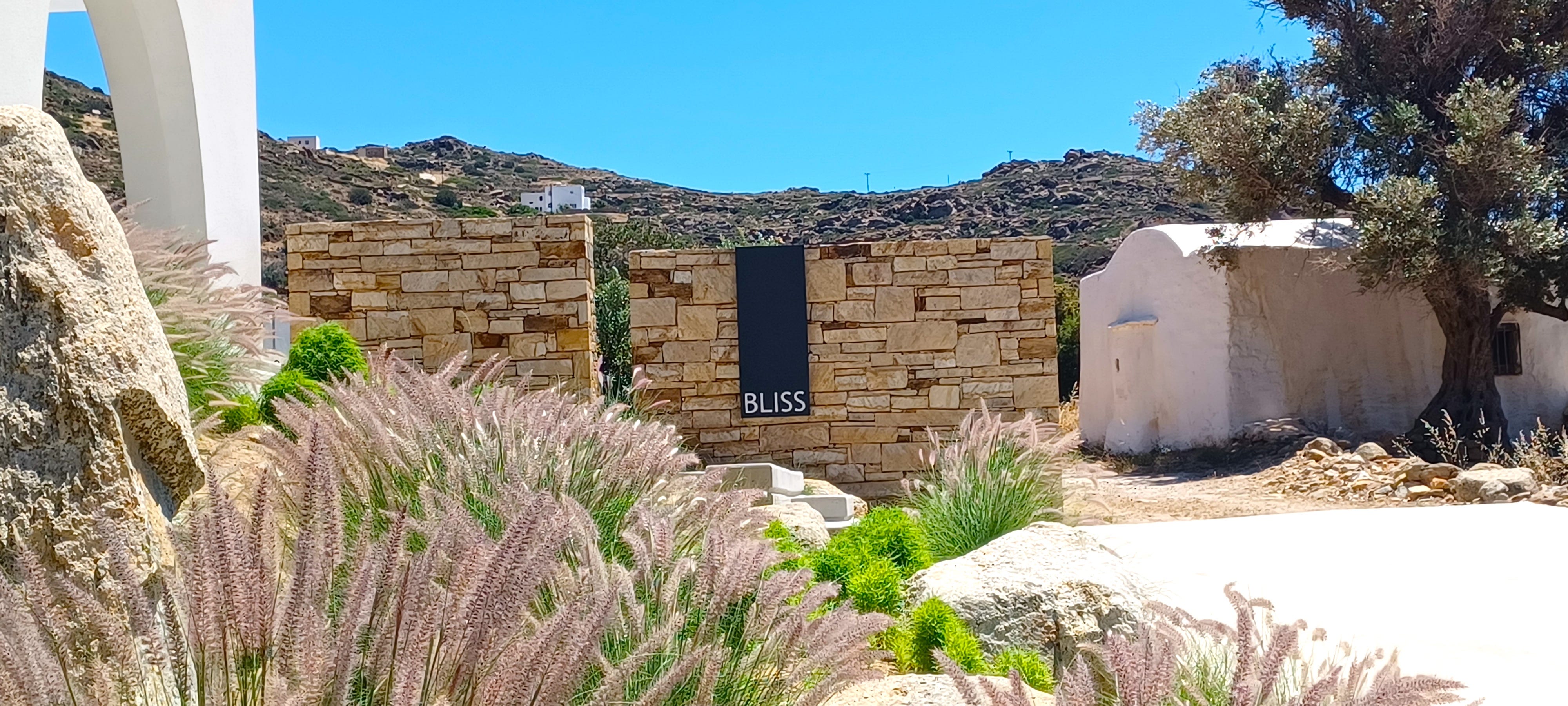
Where to stay in Ios? Most hotels cater to a younger, budget-oriented crowd, though there are a few eclectic, even over-the-top exceptions to that. If you want to be able to bolt for the ferry at a moment’s notice, book a room at the Kritikakis Village Hotel. My recommendation is to stay in a low-key spot with a good central location like the Lofos Village Hotel in Chora or its chic and almost secret premium suite annex, Bliss Ios. That pearl where each suite comes with its own pool is located down the main road from Chora at Mylopotas — and less than a ten-minute walk to what is still the island’s most iconic beach.