Stop Visiting Greece Like a Tourist: 6 Unspoken Rules for a Better Trip
From skipping peak-summer crowds to ditching the Acropolis hike, here is how to experience the real Greece beyond the clichés.

Key takeaways: Greece is a country with attractions that are so iconic everybody thinks they already know the place but there is a lot more to her than meets the eye. It’s when you avoid insisting on the cliches that the colors of Greece really begin to reveal themselves. And if you can avoid those peak crowded months of July (especially the second half) and August you’ll very likely have a better holiday experience in Greece overall.
1. Don’t just make the Acropolis in Athens your priority
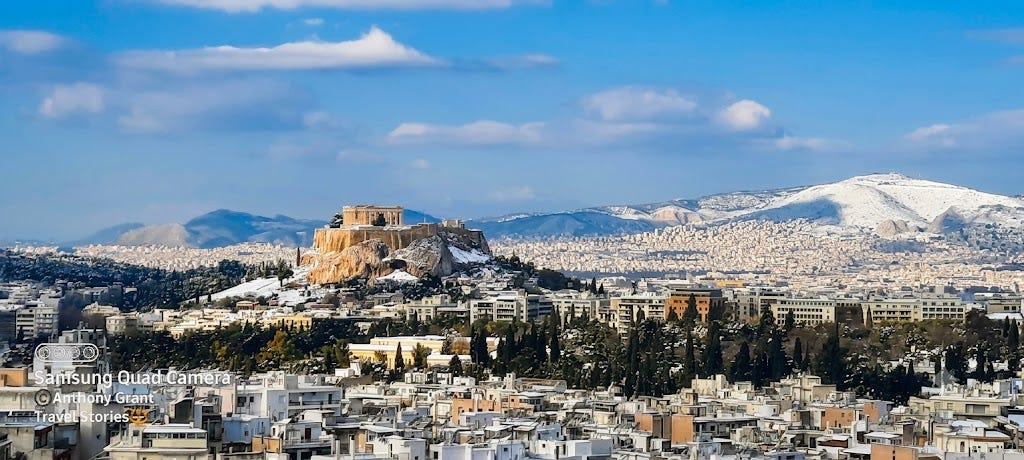
Making the Acropolis the focus of a jaunt to Athens is like making a trip to Paris about visiting the Eiffel Tower -- so don’t do it. Instead, do like the Athenians do and drink in views of the sacred rock from any number of rooftop bars and restaurants in the vicinity, or better yet wake up to a view of it from, well, almost anywhere. And the best views of Athens as a whole are actually from the top of Mount Lycavittos anyway (take the funicular in the Kolonaki neighborhood to the top).
Dodge the tourist crowds marching up to the Parthenon and instead inspect the arguably more evocative ruins at the foot of the Acropolis in the ancient agora area. I’d also suggest skipping the Acropolis Museum and diverting your cultural hours to the National Archaeological Museum across town. It’s a bit fusty but still the best museum in Greece.
2. Don’t just feast on gyro
I’ve seen this over and over (and over) again: tourists who enjoy a hearty international-style buffet breakfast at their hotel and then opt for a gyro or souvlaki platter for lunch and then again for dinner. Don’t get me wrong, authentic Greek gyros are pretty scrumptious and at about three euros each are fiscally attractive dining options too. But Greek gastronomy is more diverse than that and experiencing at least some of it can be a highlight of your trip.
To savor a Greek breakfast staple you’ll almost never find at a hotel buffet, try strapatsada, a delectable dish made with eggs (usually scrambled), feta cheese, fresh tomato sauce and a dash of olive oil. One of the best is served at the restaurant of the Acropolis Museum (you don’t have to pay for museum admission to eat at the restaurant). For the best seafood, shun the touristy tavernas around the Plaka and head instead to Piraeus, where the seafood is generally cheaper, fresher and comes with sea views, too. Vegan restaurants are also taking off, particularly in Athens.
3. Missed the summer? Don’t worry…so did a lot of Greeks
One of the greatest Greek myths is that the many islands are strictly for summertime escapes, but that’s far from the case. True, many islands rock their Greek summer vibes best in the peak months of July and August (the months that also pull the most crowds), but things have gotten so expensive that many Greeks are skipping the traditional summer break altogether. Plus swimming season and in many places doesn’t wind down until the end of October. Little islands near Athens like Hydra and Spetses are worth visiting even in winter and big islands like Crete have plenty of cultural attractions and historic sites to keep you busy throughout the year.
4. Find your nearest laiki market
The spirit of ancient Greece lives on in the weekly laiki, or outdoor fruit and vegetable market that takes place rain or shine throughout the year on Fridays. A visit to a laiki is a great way to get an eyeful and taste of nature’s bounty for which Greece is justly famous for. Every neighborhood in Athens has its own laiki and some are bigger and better than others. One of the best is in Pagrati, on Archimidous Street right behind the Panathenaic Stadium (the world’s only stadium built entirely of marble). Besides organic produce you’ll find plenty of traditional comestibles like extra-virgin olive oil, halva and honey for sale.
5. DON’T take a three-island day cruise
When you are in the Piraeus port you’ll see many advertisements for three-island cruises that promise you a mini-odyssey to a trio of islands close to Athens. Generally these are Aegina, Hydra and Poros. Focus on one island instead. Packing three islands into a single day trip is something that Greeks themselves would never do. If you are really into ancient ruins, spend time on Aegina. For dramatic scenery, Hydra’s the spot. Among all the islands within an easy ferry journey from Athens/Piraeus, Poros easily qualifies as the quiet charmer where you could linger for hours over delightful harbor views.
6. Remember the mainland
Greece is more than Athens and the islands. The region of which Athens is a part, Attica, is home to some of the most important sites in antiquity from Marathon to Cape Sounio and the Temple of Poseidon. South and east of the Greek capital, the Peloponnese offers a dramatically chiseled coastline and plenty of historical gems too, like the city of Nafplion — the first capital of Greece — and the remarkable fortress isle of Monemvasia. The northern city of Thessaloniki, named after Alexander the Great’s half-sister, is worth a detour for its history, museums and excellent restaurants.
Schedule Your Own Greek Odyssey Planning Session, today! For a one-time session fee with award-winning and uncompromising travel pro Anthony Grant, you’ll save time and money and soon be on your way to a great trip.