

We Think London Should Return the Parthenon Marbles to Athens. Rick Steves Might Need Help Tying His Shoes.
The British Museum calls itself universal. Greece sees a monument dismembered. The question is whether a museum’s global ambitions should outweigh a culture’s claim to its own heritage.

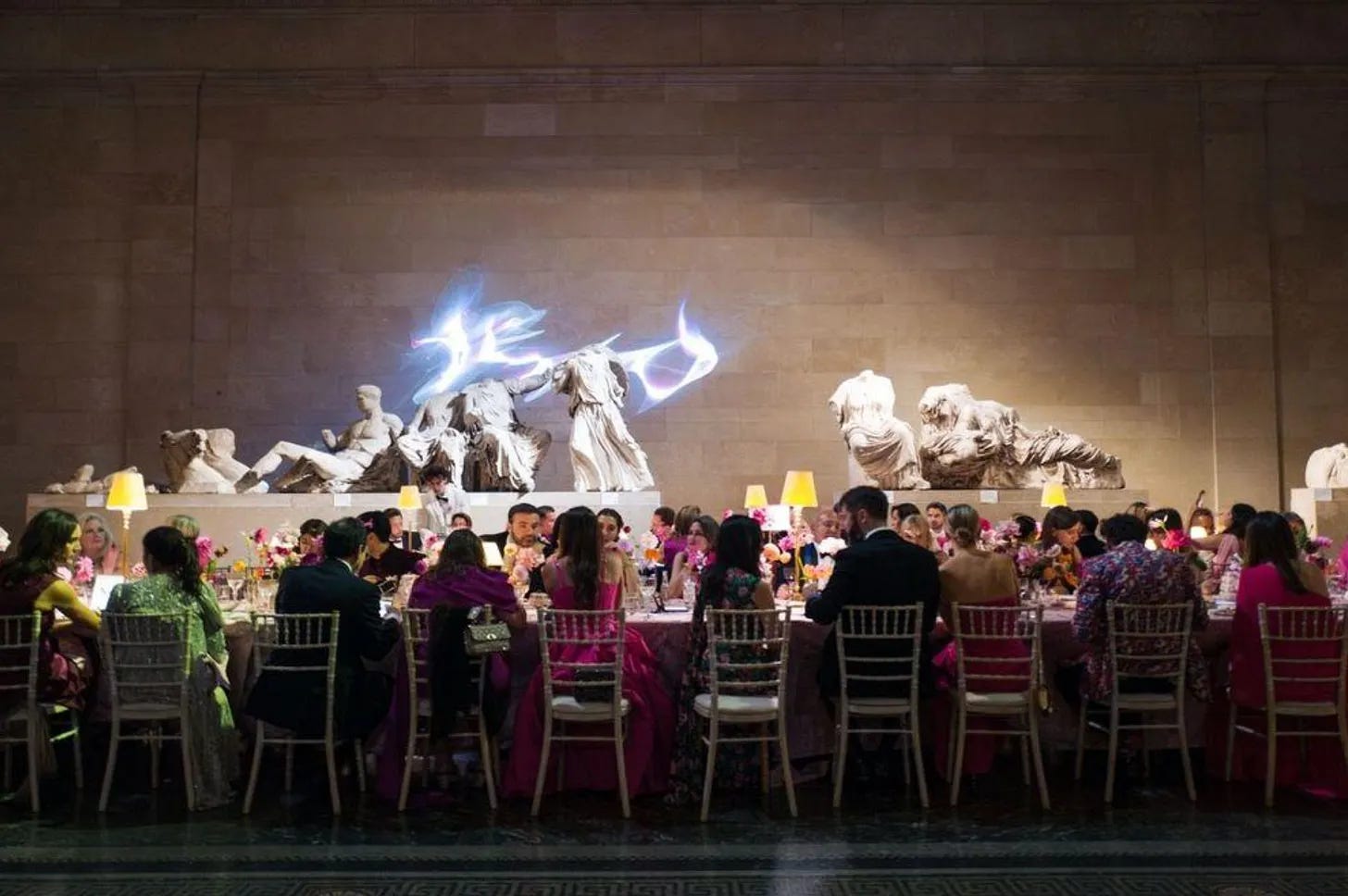
We just endured a video of Rick Steves flitting around London. America’s patron saint of saccharine road shows visited the British Museum and wasn’t troubled at all by some of the choice purloined property contained therein.
The famed “Elgin” marbles that once formed part of the Parthenon could soon be heading back to Athens from their current perch in the British Museum — not necessarily on a one-way ticket, mind you. And with approximately zero help from tone-deaf barkers of mass tourism like Steves.
The fate of the renowned statuary looms large in the Greek public consciousness. In advocating for their return, famed Greek actress Melina Mercouri, who served as Greece’s minister of culture for many years in the 1980s and 1990s, once said, “You must understand what the Parthenon Marbles mean to us. They are our pride. They are our sacrifices. They are the supreme symbol of nobility.”
Calls for their return to Greece have intensified in recent years. Prime Minister Kyriakos Mitsotakis even raised the issue in a speech he delivered to a joint session of Congress.
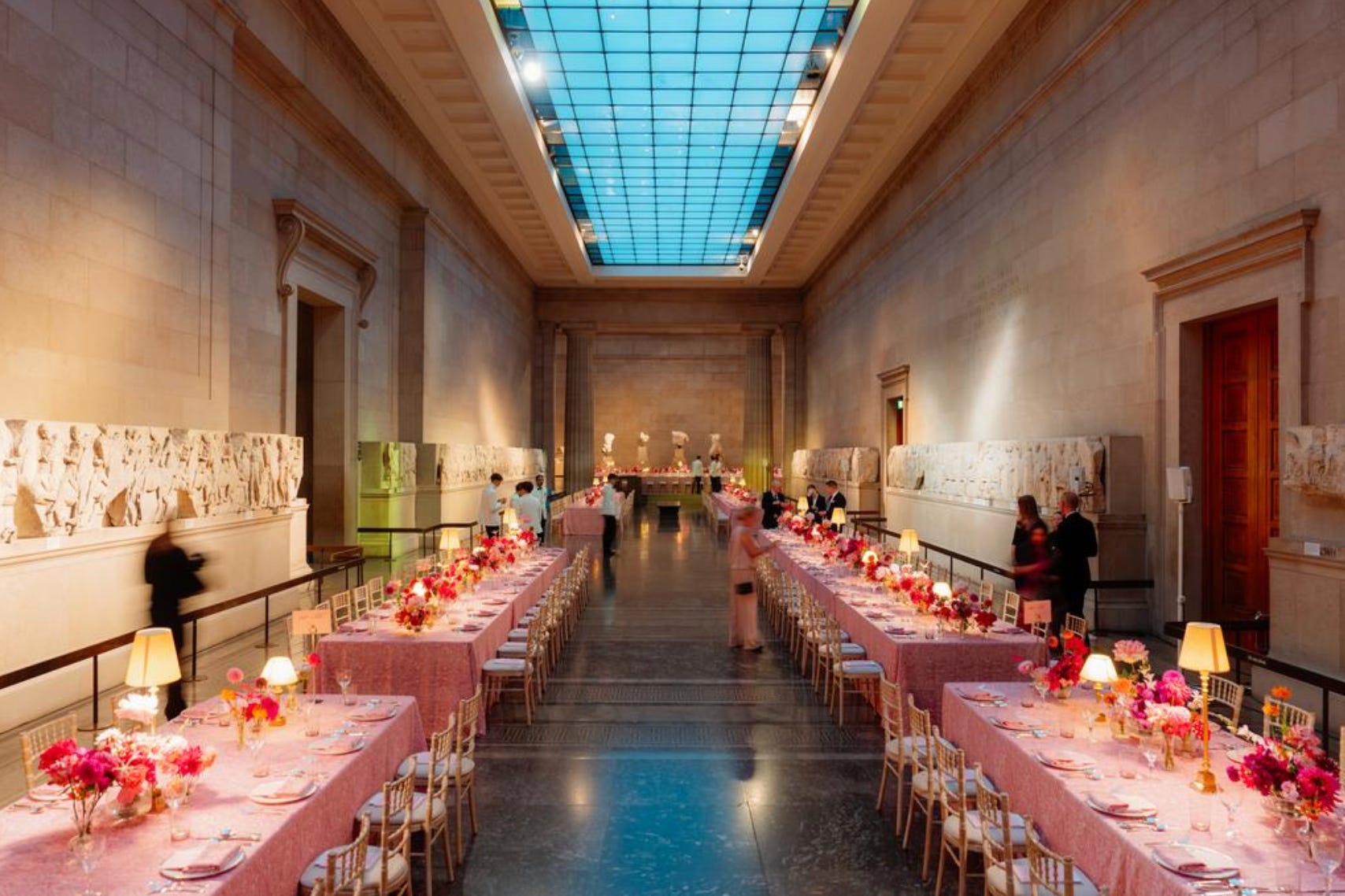
The story of how the 21 figures from the Parthenon’s pediments, sculpted by Phidias some 2,450 years ago, along with 246 feet of the Parthenon frieze, ended up in the British Museum is well known. In 1801, grabby Lord Elgin set about removing the mostly loose statuary from the Acropolis with the disputed consent of the Ottoman authorities. The marbles now form an integral part of the collection of the world-renowned British Museum.
The lingering debate over the legality of the acquisition, which Lord Byron memorably decried as “pilfered prey,” has receded somewhat. The literally weighty matter of getting the marbles back to their original home is now at the fore.
George Osborne, chairman of the British Museum, has previously warmed to a compromise that would allow the sculptures to return to Athens “on an open-ended loan in return for shorter loans of exhibits stored at the Acropolis Museum.” Such an arrangement would “circumvent the obstacle presented by the fact that the trustees of the British Museum own the friezes and are prevented by law from giving them away.”
In a press statement, the British Museum has said, “We’re actively seeking a new Parthenon partnership with our friends in Greece, and as we enter a new year constructive discussions are ongoing.”
The contours of a long-term loan could resemble those of a deal struck in recent years between Greece and New York’s Metropolitan Museum of Art for the progressive return to Athens of 161 ancient artifacts in exchange for others going to the Met. That process could last until 2048, and the artifacts involved do not carry the same psychological weight as those from the Parthenon.
What has truly stymied the marbles’ Acropolis-bound trajectory to date is less bureaucracy than culture. Ancient treasures such as the Parthenon statuary have long been regarded in Britain as part of what makes the British Museum a universal institution.
This is where the argument gets especially strange. To the British Museum, the marbles are evidence of its status as a great encyclopedic institution. To Greece, they are pieces of one of the most recognizable monuments in human history that were removed from their original home and carried halfway around the world.
As a sign of how difficult it is to part with what is, for some, a legitimate portion of a world-class collection—and for others, loot—a museum official insisted last year that much of the frieze had been removed not from the Parthenon itself, but from the rubble around it.
“These items were not all hacked from the building as has been suggested,” the museum’s deputy director, Jonathan Williams, told delegates to a UNESCO meeting.
But essentially, they were.
And even if one accepts every British argument about the circumstances of their removal, there is something faintly ridiculous about treating the question as though the marbles’ natural habitat is a glass case in Bloomsbury.
Should the carved figures and frieze be returned to Athens, they would be displayed in the Acropolis Museum, not reinserted into the fragile ancient temple itself. The museum has already set aside gallery space for the artifacts. As of yet, though, no official announcement has been made and no timeline for an eventual return has been offered.
Even if London relinquishes its grip, the fine print could turn into the making or unmaking of Mitsotakis, who faces a re-election campaign next year. Should he be able to wrangle full restitution of the goods, it would be considered a boost to his poll numbers, healthy as they are at present.
If Greece is granted a deal in the form of a long-term loan, however, the narrative would put London, and not Athens, in the driver’s seat. That is something upon which Mitsotakis’ rivals will surely pounce.
Mitsotakis is well aware of the stakes.
The Greek news site Newsbreak was unsparing in its assessment, stating that “if we judge by Mitsotakis’s performance in his secret diplomacy with Erdoğan, we should expect the same disastrous results with regard to the sculptures of the Parthenon which were stolen by Elgin and are still owned by the thieves of the British museum.” Ouch.
No one can say that the Greeks don’t love a good drama. But this particular drama has consequences well beyond the Aegean.
There is a larger question here about what museums are for. If the purpose is to assemble as many of humanity’s greatest objects as possible under one roof, the British Museum has an impressive case to make. If the purpose is to preserve and interpret cultural heritage in the places and contexts that give it meaning, the case for returning the Parthenon marbles to Athens is considerably harder to dismiss.
And then there is Rick Steves.
The problem with latter-day Pollyannas like Steves is not that they enjoy traveling. It is that they have made a career out of turning the messy history of Europe into a reassuringly pleasant itinerary: Here is a cathedral, there is a museum, here is a charming square, and there is the priceless cultural inheritance of another civilization neatly arranged behind glass. Oh and yeah, another cathedral. There’s Jesus. There’s Mary. Are you atheist, Jewish, Muslim? Because I said there’s Jesus. There’s Mary. Can’t you hear me?
No awkward questions. No pilfered prey. No inconvenient arguments about who took what from whom.
Just smile, admire the marble and move along.
After all, the last thing a professional purveyor of mass tourism needs is to suggest that some of the things tourists are admiring might have a compromised history.
That kind of candor might put a dent in the guidebook sales.
And heaven forbid the creepily church-obsessed Rick Steves should have to stop bopping around the Thames long enough to take notice of something that’s slightly off-script called — what’s that word again? — reality.

Here is where the argument gets especially strange, the Louvre has a collection of marble sculpture taken from the Parthenon but, unlike with the constant pressure they heap on the British Museum, Greece has never ever made any formal request either to the Louvre or to the French government to have those Parthenon Marbles housed in Paris permanently returned to Athens. Some might not call that strange so much as hypocritical.